

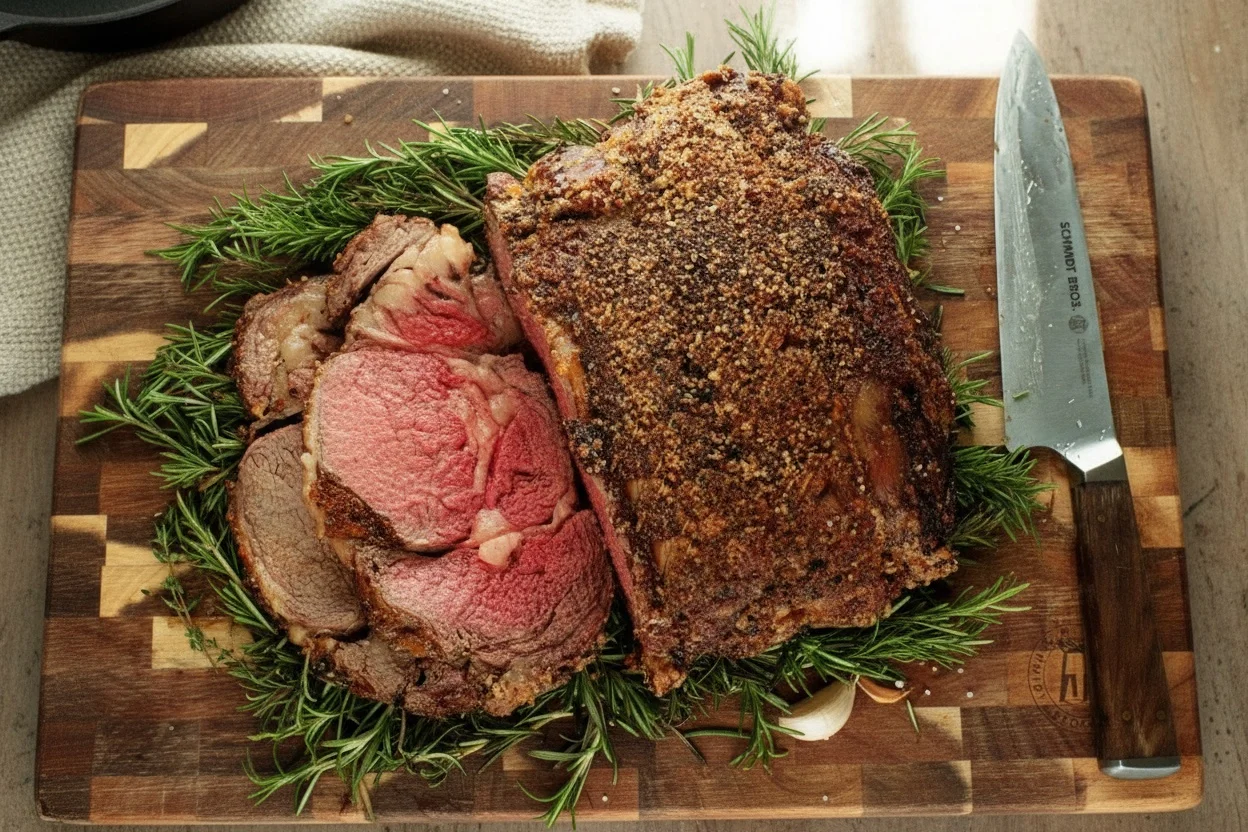
Cooking a boneless prime rib can be intimidating, but this recipe for the Boneless Prime Rib Recipe using the easiest and foolproof cooking method will ensure success. Prime rib, a tender and succulent beef roast, is perfect for holidays and special occasions.
When it comes to Boneless Prime Rib Recipe, a foolproof method not only guarantees a delicious outcome but also reduces stress in the kitchen, allowing you to focus on entertaining guests. This article will guide you through a simple, step-by-step process to achieve a perfectly cooked boneless prime rib every time.
Ingredients for Boneless Prime Rib Recipe
Creating a delicious Boneless Prime Rib Recipe starts with selecting high-quality ingredients. You can learn more about this topic.
- Boneless prime rib roast (about 4 to 5 pounds for 6-8 servings)
- 2 tablespoons of salt
- 1 tablespoon of freshly ground black pepper
- 5 cloves of garlic, minced or 1 tablespoon of garlic powder
- 2 tablespoons of fresh rosemary, chopped
- 2 tablespoons of fresh thyme, chopped
- 3 tablespoons of olive oil or melted butter
- Optional: Flavorful prime rib marinade with red wine, soy sauce, and a hint of lemon juice
When it comes to Boneless Prime Rib Recipe, when selecting meat, look for good marbling, as it enhances flavor and tenderness. Fresh herbs are preferable to dried ones, offering more vibrant flavors. Check out our related guide for more tips.
When it comes to Boneless Prime Rib Recipe, understanding the importance of quality ingredients is crucial. Prime rib roast should ideally have a deep red color and abundant marbling for the best flavor profile.
If planning a larger gathering, scale the ingredients proportionally. Cooks who prefer stronger flavors might adjust garlic and rosemary quantities to their liking, balancing robustness with harmony.
Steps / Instructions for Cooking Boneless Prime Rib
When it comes to Boneless Prime Rib Recipe, follow these detailed steps to ensure your boneless prime rib turns out perfectly.
Preparation
- Remove the boneless prime rib from the refrigerator about 2-3 hours before cooking to allow it to reach room temperature.
- Trim excess fat if necessary, leaving a thin layer for flavor.
- Pat the roast dry with paper towels to ensure the seasoning adheres well.
- Create a tender prime rib seasoning by mixing salt, pepper, garlic, rosemary, and thyme with olive oil or butter. Rub the garlic herb prime rib rub generously over the roast.
When it comes to Boneless Prime Rib Recipe, during preparation, ensure even distribution of the rub for consistent flavor.
A useful technique is to massage the seasoning into the meat, allowing it to penetrate deeper. If time allows, wrap the seasoned prime rib in plastic wrap and refrigerate overnight for enhanced flavor absorption, producing a more seasoned, savory experience.
Cooking Method
When it comes to Boneless Prime Rib Recipe, for the best boneless prime rib cooking method, use a slow roasted prime rib technique:
- Preheat your oven to 250°F (120°C).
- Place the seasoned roast on a rack in a roasting pan, fat side up.
- Roast the meat in the oven for about 25 minutes per pound, or until the internal temperature reaches 120°F (49°C) for medium-rare.
- For a perfect crust, employ the reverse sear prime rib technique. Remove the roast from the oven at 120°F, let it rest for 20-30 minutes, and then sear it in a preheated 500°F (260°C) oven for 7-10 minutes.
A pro tip for achieving even cooking is to rotate the roasting pan halfway through the cooking process.
This compensates for any hot spots in the oven, ensuring the prime rib cooks evenly. Additionally, placing a pan of water at the bottom of the oven can help maintain moisture, resulting in a more tender roast.
Resting
When it comes to Boneless Prime Rib Recipe, allow the roast to rest for at least 20 minutes before slicing. This ensures the juices redistribute throughout the meat, resulting in a succulent beef roast recipe.
During the resting phase, cover the roast loosely with aluminum foil. This keeps the heat intact without trapping steam, which can potentially soften the crisp crust. The resting process is vital for retaining juices, transforming into a mouth-watering experience with every bite.
Tips & Tricks for Perfect Prime Rib
- Use a meat thermometer to check the doneness accurately; avoid cutting into the meat too early.
- For classic prime rib flavors, ensure the herbs and seasoning are freshly mixed; avoid pre-packed rubs.
- Prevent overcooking by monitoring the roast during the final 30 minutes closely.
- Resting is critical; do not skip this step to ensure moist meat.
An underutilized trick is to let your meat thermometer remain in the roast during cooking. This allows for constant temperature monitoring, aiding in avoiding common pitfalls like over or undercooking. Additionally, factor in carry-over cooking, where the meat continues to cook even after removal from the oven.
Variations of Boneless Prime Rib
- For a gourmet prime rib meal, consider experimenting with different herbs like basil or tarragon.
- Try different flavorful prime rib marinades with balsamic vinegar or mustard.
- For a different cooking method, consider smoking or grilling.
- This recipe can be adapted for boneless ribeye by adjusting the cooking time.
Those seeking a bolder flavor might experiment with a crust of Dijon mustard and breadcrumbs, creating a tangy, rich outer layer. Smoking your prime rib adds a depth of flavor, harnessing woods like hickory or oak, resulting in a distinctive savory taste not achievable through traditional oven roasting.
Serving Suggestions for Boneless Prime Rib
- Pair with classic side dishes like creamy mashed potatoes or roasted seasonal vegetables.
- Prime rib with au jus makes an excellent accompaniment; use the pan drippings, wine, and beef broth to create a rich sauce.
- For presentation, slice evenly and garnish with a sprig of rosemary.
Serving boneless prime rib with Yorkshire pudding adds a traditional touch, capturing the roast’s drippings within its batter for an exquisite blend of flavors. Pairing with a robust red wine, such as Cabernet Sauvignon, enhances the meat’s rich flavors, providing a complete, luxurious dining experience.
FAQ about Boneless Prime Rib
- How to cook boneless ribeye? Use similar principles of seasoning and cooking time adjustment based on thickness.
- What to do with prime rib leftovers? Make prime rib sandwiches, tacos, or a hearty beef stew.
- Best way to store and reheat prime rib? Store in airtight containers and reheat in a low-temperature oven to avoid drying out.
- What is the ideal internal temperature for prime rib? Aim for 120°F (49°C) for medium-rare.
In conclusion, mastering this Boneless Prime Rib Recipe can elevate your culinary skills, ensuring a moist and tasty result. This foolproof method, along with our tips and variations, guarantees a delightful meal suitable for any occasion. Try it for your next gathering and share your experience!
Boneless Prime Rib Recipe
A foolproof method for cooking a tender and succulent boneless prime rib, perfect for holidays and special occasions.
Ingredients
- Boneless prime rib roast (about 4 to 5 pounds for 6-8 servings)
- 2 tablespoons of salt
- 1 tablespoon of freshly ground black pepper
- 5 cloves of garlic, minced or 1 tablespoon of garlic powder
- 2 tablespoons of fresh rosemary, chopped
- 2 tablespoons of fresh thyme, chopped
- 3 tablespoons of olive oil or melted butter
- Optional: Flavorful prime rib marinade with red wine, soy sauce, and a hint of lemon juice
Directions
Remove the boneless prime rib from the refrigerator about 2-3 hours before cooking to allow it to reach room temperature.
Trim excess fat if necessary, leaving a thin layer for flavor.
Pat the roast dry with paper towels to ensure the seasoning adheres well.
Create a seasoning rub by mixing salt, pepper, garlic, rosemary, and thyme with olive oil or butter. Rub the mixture generously over the roast.
Preheat your oven to 250°F (120°C).
Place the seasoned roast on a rack in a roasting pan, fat side up.
Roast the meat in the oven for about 25 minutes per pound, or until the internal temperature reaches 120°F (49°C) for medium-rare.
For a perfect crust, remove the roast from the oven at 120°F, let it rest for 20-30 minutes, and then sear it in a preheated 500°F (260°C) oven for 7-10 minutes.
Allow the roast to rest for at least 20 minutes before slicing, covering it loosely with aluminum foil.
Recipe Reviews
- ★★★★★
Excellent recipe!
Leave a Reply
Your email address will not be published. Required fields are marked *



Excellent recipe!