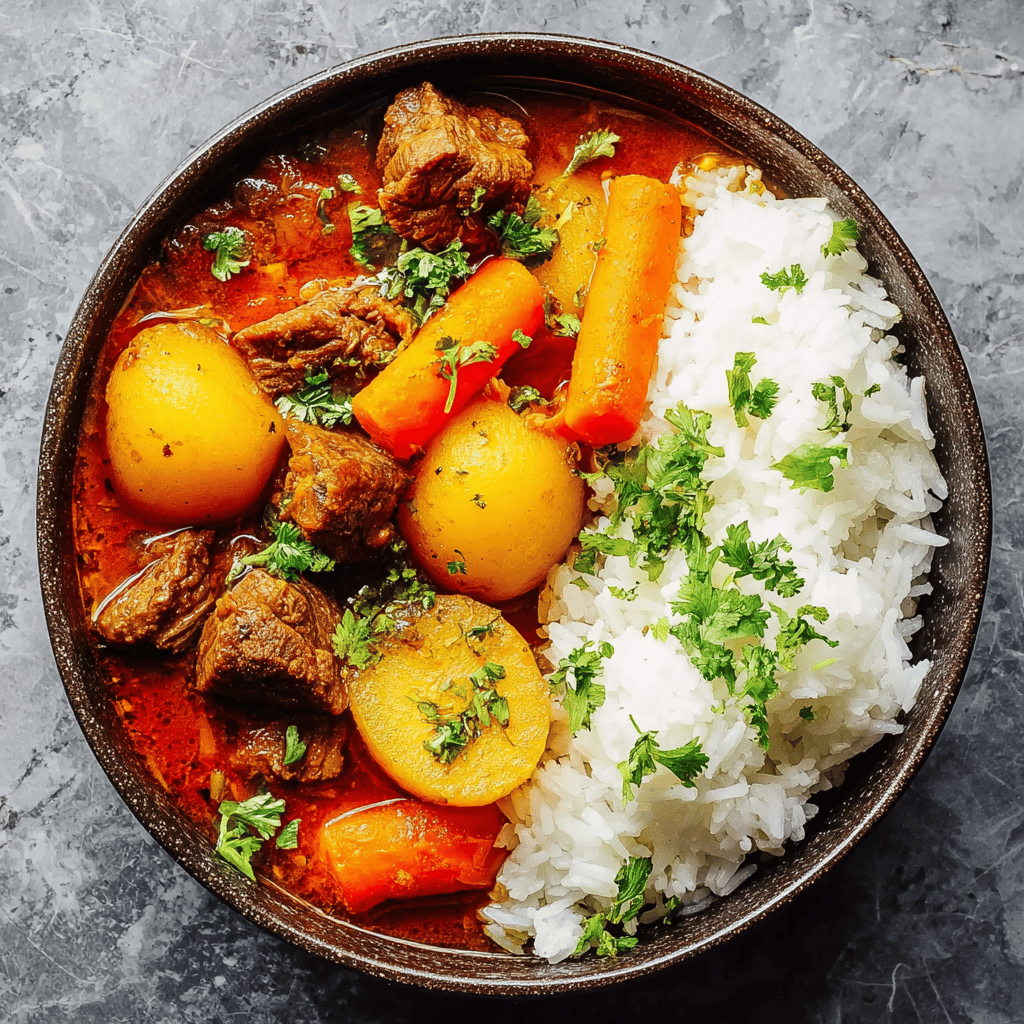
I’ll never forget the first time I tried my hand at Beef Massaman Curry. It was a chilly evening, and I was craving something hearty and warm. I had heard about this dish from a friend who’d traveled to Thailand and couldn’t stop raving about it. So, I rolled up my sleeves, ready to transport my kitchen to the streets of Bangkok. Let’s just say, my first attempt was a humble lesson in the art of patience and spice. The beef was tougher than I expected, and I might have been a tad heavy-handed with the tamarind. But you know what? It’s those mishaps in the kitchen that lead us to perfect our craft, right?
Now, after a few tweaks and more laughs than I can count, I’ve honed a Beef Massaman Curry Recipe that’s a hit with family and friends. It’s become my go-to comfort meal, especially when the weather starts to turn. The kids love when I announce it’s ‘Massaman Night’, and honestly, there’s no better feeling than watching them gobble up every last bite.
Table of Contents
Ingredients
Gathering the right ingredients is like assembling a cast for a play—each one crucial to the final show. Here’s what you’ll need for a curry that’ll have you coming back for seconds (and thirds).
- 2 lbs beef chuck, cut into bite-sized pieces
- 2 tablespoons Massaman curry paste (I swear by the Mae Ploy brand)
- 1 can (13.5 oz) coconut milk
- 2 medium-sized potatoes, peeled and cubed
- 1 large onion, sliced into wedges
- 1/2 cup unsalted roasted peanuts
- 1/4 cup tamarind paste
- 3 tablespoons fish sauce
- 2 tablespoons palm sugar (brown sugar is a fine substitute)
- 1 cinnamon stick
- 1 star anise
- 1 bay leaf
- 1 cup water
- Vegetable oil for frying
Instructions
Let’s dive into the cooking process. I learned these steps through trial and error (and a bit of stubbornness), so rest assured, you’re in good hands.
- Heat a large pot over medium heat and add enough oil to coat the bottom.
- Add the Massaman curry paste and fry for about a minute until it becomes fragrant. (The aroma is intoxicating!)
- Mix in the beef and coat it well with the paste. Cook until the beef is browned on all sides.
- Pour in half of the coconut milk and bring to a gentle boil. Add the potatoes, onion, peanuts, tamarind paste, fish sauce, palm sugar, cinnamon stick, star anise, and bay leaf.
- Add the water, bringing your curry to a simmer. Cover and cook on low heat for about 1.5 hours or until the beef is tender to your liking.
- Stir in the remaining coconut milk and simmer for another 10 minutes. Adjust seasoning if necessary.
- Remove the cinnamon stick, star anise, and bay leaf before serving. (Nobody wants a surprise spice in their bite!)

Tips & Tricks
Here are a few nuggets of wisdom to help you create a curry that’s out of this world.
- Patience is key when it comes to simmering. Give your beef the time it needs to become fork-tender.
- If you can’t handle too much heat, start with a little less curry paste and adjust as you go.
- (Trust me on this) Always taste as you cook—it’s the best way to ensure the balance of flavors is just right.
- For an extra layer of flavor, toast the peanuts before adding them to the curry.
FAQ
Got questions? I’ve got answers—and probably a story to go along with them.
Q: Can I use chicken instead of beef?
A: Absolutely! Just adjust the cooking time since chicken cooks faster than beef.
Q: What if I can’t find palm sugar?
A: Brown sugar or even honey can be used as a substitute. It’ll change the flavor slightly, but it’ll still be delicious.
Q: How spicy is Massaman curry?
A: It’s generally milder than other Thai curries. But remember, you’re in control of the heat!
Every time I make this curry, I’m reminded of the cultural story woven into its spices and textures. Massaman curry is a beautiful blend of Thai and Persian influences, a testament to the power of culinary fusion. It’s a dish that tells a story of trade routes, cultural exchange, and the universal language of good food. It’s not just a meal; it’s a journey through history, right at your dinner table.
In conclusion, I hope this Beef Massaman Curry brings as much warmth to your kitchen as it has to mine. From my first botched attempt to the recipe I cherish now, it’s been a journey of love, laughter, and learning. Whether it’s a weeknight dinner or a special occasion, this curry is sure to impress. So, gather your ingredients, embrace the process, and get ready for a flavor-packed adventure. Who knows? It might just become your new favorite comfort food, too.
Troubleshooting
Sometimes, despite our best efforts, things can go sideways in the kitchen. Honestly, I’ve had my fair share of “oops” moments while making this curry. Here are a few tips I’ve picked up along the way:
- If your curry seems too thin, let it simmer uncovered for a bit longer. The sauce will reduce and thicken to that perfect, velvety consistency.
- Ended up with a curry that’s too thick? No worries! Just stir in a little more water or coconut milk until you reach the desired texture.
- Got a bit too enthusiastic with the curry paste or fish sauce? Balance it out with a touch more palm sugar or a squeeze of lime juice. It’s all about hitting that sweet spot between savory, sweet, and tangy.
(Learned this the hard way) Always keep an eye on your pot during the long simmer. You don’t want to find out the hard way that your curry’s been sticking and burning at the bottom.
Substitutions
Let’s talk swaps, because let’s face it, we’re not always prepared. Here are some ingredient substitutions that I’ve actually used in a pinch:
- No Massaman curry paste? Use red curry paste and add a pinch of cinnamon, cloves, and nutmeg to mimic those warm Massaman flavors.
- Out of tamarind paste? A mix of lime juice and brown sugar can give you that tart-sweet kick you’re looking for.
- If peanuts are a no-go (allergies are no joke), try using cashews for that nutty crunch or just skip the nuts altogether.
(Game changer!) Don’t be afraid to experiment with different veggies too—carrots and bell peppers can add a nice pop of color and texture.
Storage Tips
Now, about those leftovers (if you have any). Here’s how to keep your curry as mouthwatering as day one:
- Let the curry cool completely before transferring it to an airtight container. It’ll last in the fridge for up to 3 days.
- When reheating, do it slowly over low heat on the stove. You might need to add a splash of water to loosen it up.
- Massaman curry freezes beautifully! Just portion it out and freeze for up to 3 months. Perfect for those “I can’t even think about cooking” nights.
(And trust me on this) The flavors actually deepen with time, so you’re in for an even more delicious meal the second time around.
Variations
Whether you’re feeling adventurous or just dealing with a picky eater, variations can be a lifesaver. Here’s how to shake things up:
- Turn up the heat with extra chili peppers or a dollop of chili paste if you’re into spice.
- Add some sweet potato or pumpkin chunks for a seasonal twist that’s especially great in the fall.
- Feeling fancy? Swap out the beef for lamb and treat yourself to an even richer version of this classic dish.
(Just between us) Sometimes I throw in a handful of cherry tomatoes near the end of cooking for a burst of freshness—it’s surprisingly good!
Calories
Now, I know some of you might be wondering about the calorie count in this dish. Massaman curry is rich and indulgent, with coconut milk and beef as the main culprits. A single serving could be around 600-700 calories. But here’s the thing: it’s so worth it. Just balance it out with a lighter meal earlier in the day, and you’re golden.
Lists
For those who love to be prepared, here’s a quick rundown:
Grocery List:
- Beef chuck
- Massaman curry paste
- Coconut milk
- Potatoes
- Onion
- Unsalted roasted peanuts
- Tamarind paste
- Fish sauce
- Palm sugar (or brown sugar)
- Cinnamon stick
- Star anise
- Bay leaf
Equipment List:
- Large pot
- Stirring spoon
- Knife and cutting board
- Measuring cups and spoons
Remember, cooking is as much about the journey as it is about the destination. So, tie on that apron, take a deep breath, and start creating. With each simmer, stir, and taste, you’re not just making a meal—you’re crafting memories. And in my book, that’s what makes every dish, every effort, and every little kitchen blunder absolutely priceless.