

Ingredients
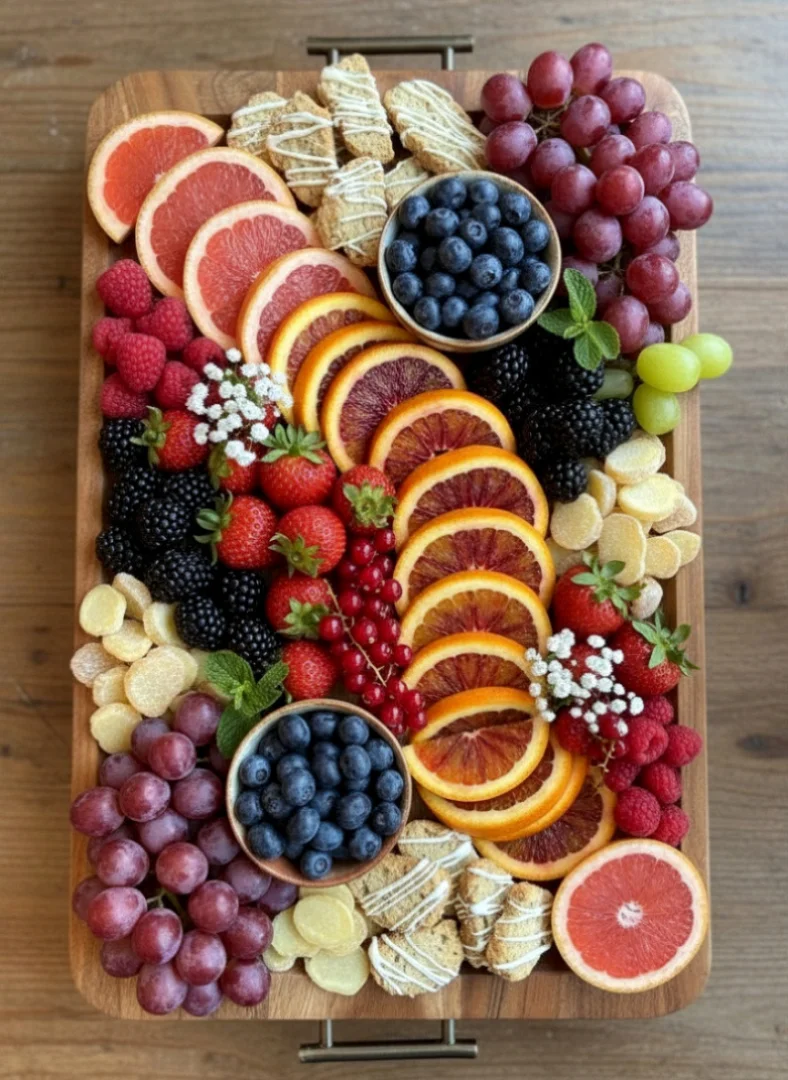
Building a stunning fruit charcuterie board is about choosing a vibrant mix of colors, textures, and flavors. Below is a well‑rounded list that serves 8–10 people as an appetizer or grazing snack. Adjust quantities based on your crowd.
Fresh Fruits
- Berries (2 cups total) – 1 cup fresh strawberries (hulled and halved if large), ½ cup blueberries, ½ cup raspberries. Look for firm, unblemished berries; rinse gently and pat dry just before arranging.
- Melon (2 cups) – ½ small cantaloupe and ½ small honeydew, seeded and cut into 1‑inch cubes or melon‑ball shapes. Choose melons that feel heavy for their size and yield slightly at the stem end.
- Grapes (1 cup) – Seedless red and green grapes, still on small clusters for easy grabbing. Rinse and dry thoroughly.
- Citrus (1–2 fruits) – 1 large orange or 2 clementines, peeled and sliced into rounds or segmented. For a summer board, add 1 cup fresh pineapple chunks.
- Stone fruit (1 cup) – If in season, use 2 ripe peaches or nectarines, pitted and sliced into wedges. Otherwise, substitute kiwifruit (2 peeled and sliced) or mango (1 ripe, cubed).
- Apple or pear (1 large) – 1 Honeycrisp apple or Bosc pear, cored and thinly sliced. Toss slices in a bowl with 2 tablespoons lemon juice and 1 tablespoon water to prevent browning.
- Dried fruit (½ cup) – Dried apricots, figs, or unsweetened dried mango. These add chew and intense sweetness.
Cheeses (choose 3–4 varieties for contrast)
- Soft cheese (4–6 oz) – Brie or Camembert, left at room temperature for 30 minutes before serving so the center is creamy.
- Semi‑soft cheese (4–6 oz) – Sharp cheddar (cut into thin wedges) or Gouda (sliced or cut into small cubes).
- Fresh cheese (4 oz) – Goat cheese log (plain or herbed) or fresh mozzarella balls (bocconcini).
- Blue cheese (3 oz optional) – A crumbly blue like Stilton or Gorgonzola for a punchy contrast.
Savory Accents
- Cured meat (4 oz, optional) – Prosciutto slices (folded into ribbons) or salami (thinly sliced and quartered).
- Olives (½ cup) – Mixed Kalamata and Castelvetrano olives, drained.
- Pickled items (optional) – Cornichons or pickled red onions for acidity.
Dips & Spreads
- Chocolate dip (¾ cup) – Dark or milk chocolate melted with 2 tablespoons coconut oil for a smooth, dippable texture. See the fruit board with chocolate variation below.
- Yogurt dip (¾ cup) – ½ cup plain Greek yogurt + 2 tablespoons honey + 1 teaspoon vanilla extract. Whisk until creamy.
- Honey (¼ cup) – For drizzling over cheese or fruit.
Crunch & Crisp Elements
- Crackers (about 6–8 oz) – A mix of plain water crackers, whole‑grain crispbreads, and buttery shortbread rounds.
- Nuts (½ cup) – Toasted almonds, pecans, or walnut halves. For nut‑free boards, use roasted chickpeas or pumpkin seeds.
- Fresh herbs (small handful) – Mint leaves, basil, or edible flowers (pansies, nasturtiums) for garnish.
Steps / Instructions
- Prep the fruit board base. Select a large wooden board, marble slab, or rimmed tray (at least 14×18 inches). If using wood, rub it with a cut lemon half to lightly sanitize and add a subtle citrus scent. Let it air dry for 2 minutes.
- Wash and dry all fresh fruit. Fill a large bowl with cool water and a splash of white vinegar (1 tablespoon per quart). Submerge berries for 2 minutes, then rinse under cold water. Pat everything dry with paper towels—wet fruit makes the board soggy and dilutes dips.
- Cut fruit into uniform shapes. Slice melons, pineapples, and stone fruits into 1‑inch chunks or wedges. Halve strawberries lengthwise. Keep small berries whole. Thin apple slices should be about ⅛ inch thick; toss them immediately in lemon water (2 tablespoons lemon juice + 1 cup water) for 30 seconds, then drain. For grapes, leave small clusters intact (3–4 grapes per stem).
- Place the largest items first. Set the cheese wedges and small bowls of dips (chocolate, yogurt, honey) at three corners of the board, evenly spaced. Position the dried fruits and olives in small clusters near the cheeses. This anchors the layout.
- Add the melon and citrus. Fan out melon cubes and orange slices in the center of the board, leaving open spaces for softer berries.
- Lay the semis and soft fruits. Scatter berries, grapes, and kiwi slices in the gaps. Nestle peach wedges against the cheese. The goal is a mosaic with no large empty spaces—guests should see color from every angle.
- Insert the crunch elements. Tuck crackers and nuts into empty nooks, standing up for easy grabbing. Place a few crackers directly beside the cheese so they can be paired instantly.
- Add savory accents. If using prosciutto, fold each slice into a loose ribbon and place it in a small pile. Lay salami slices folded or curled. Add olives and cornichons in a separate cluster.
- Garnish and serve. Scatter fresh mint leaves, basil, or edible flowers over the fruit. Drizzle a small amount of honey over the goat cheese or melon. Serve immediately, or refrigerate uncovered for up to 1 hour (cover with plastic wrap if chilling longer, then remove plastic 20 minutes before serving).
Tips & Tricks
- Prevent browning without sacrificing flavor: The lemon‑water bath works only for apples and pears—do not soak berries or melon, as they will absorb the acid and taste bitter. For avocado slices (optional), brush with lime juice.
- Keep fruit fresh longer: Assemble the board no more than 2 hours before serving. If you must prepare earlier, store cut melon and pineapple in an airtight container in the fridge for up to 1 day, but add berries and sliced apples no more than 1 hour ahead.
- Room temperature is key: Cheese tastes best when not cold. Let it sit on the counter for 30 minutes before assembling. Remove dips from the fridge 15–20 minutes before serving.
- Use a ‘first‑bite’ strategy: Place the most eye‑catching items (like a whole Brie wheel or a cluster of red grapes) at the center or at eye level. People will naturally grab those first, so make sure they are easy to pick up with a cocktail napkin.
- Knife skills for uniform slices: For peaches and apricots, slice along the natural seam, twist apart, then cut each half into thirds. For mango, cut off the cheeks, score a grid in the flesh without cutting the peel, then scoop out cubes with a spoon.
- Double up on small bowls: If you’re serving two dips, use ramekins that are 4–6 ounces each. Place them on opposite sides so guests don’t queue up at one spot.
- Make‑ahead trick for busy parties: Pre‑cut all firm fruits (melon, pineapple, apple slices with lemon) up to 1 day ahead and store in separate sealed containers in the fridge. The morning of your event, wash berries, slice soft fruits, and assemble the board in 15 minutes.
Variations
Seasonal fruit charcuterie boards
- Summer fruit board (June–August): Use peak‑season watermelon, ripe peaches, blackberries, and figs. Swap cheddar for fresh mozzarella and add a basil‑pesto drizzle. Serve alongside 15 Summer Side Dishes for BBQ Parties for a full spread.
- Winter fruit board (November–February): Feature blood oranges, pomegranate arils, Fuyu persimmons, and dried cranberries. Pair with aged Gouda, a wedge of blue cheese, and a spiced honey (warm ¼ cup honey with ¼ teaspoon cinnamon).
- Spring fruit board (March–May): Highlight strawberries, rhubarb (roasted with sugar until tender), and kiwifruit. Add a dollop of lemon‑ricotta dip (½ cup ricotta + zest of 1 lemon + 1 tablespoon honey).
Dietary adaptations
- Vegan fruit charcuterie board: Omit all cheeses and meats. Use cashew‑based cheese alternatives (store‑bought or homemade), a chocolate‑hummus dip, and nuts. Add roasted chickpeas for protein crunch.
- Gluten‑free fruit board: Replace wheat‑based crackers with rice crackers, seed crisps, or sliced cucumber rounds as dippers. Double‑check any deli meats for gluten (most are gluten‑free, but prosciutto and salami often are safe).
- Nut‑free fruit board: Skip nuts and use pumpkin seeds, sunflower seeds, or roasted edamame. For crunch, offer plain popcorn or cheese straws (ensure they contain no nut ingredients).
Flavor twists
- Sweet and savory fruit board: Add a small bowl of Rotel Dip for a surprising contrast—the salty, spicy cheese dip pairs unexpectedly well with sweet melon.
- Tropical fruit board: Use mango, papaya, dragon fruit, and coconut chips. Serve with a passion‑fruit syrup (¼ cup passion‑fruit pulp + 2 tablespoons agave) instead of honey.
- Berry‑lovers board: Fill the entire board with blackberries, raspberries, boysenberries, and strawberries. Add a dark‑chocolate ganache dip (½ cup chocolate chips + ⅓ cup heavy cream) and freeze‑dried raspberry powder for dusting.
Serving Suggestions
A fruit charcuterie board is endlessly versatile. Serve it as the centerpiece of a brunch table, as a light appetizer before a heavy meal, or as a dessert course alongside coffee. Here are a few ways to round out the experience:
- Pair with beverages: Sparkling wine or Prosecco cuts through the sweetness. For non‑alcoholic options, serve iced green tea with mint or a citrus‑infused sparkling water. Red wine lovers can try a light Beaujolais.
- Add a savory companion: For a heartier spread, include a small bowl of Rotel Dip or The Best Pasta Salad with Italian Dressing on the side—both contrast beautifully with the fruit’s sweetness.
- Garnish like a pro: Scatter fresh edible flowers (nasturtiums, violas) or a few sprigs of rosemary. A light dusting of powdered sugar over red berries gives a snowy effect for holiday boards.
- Make it a meal: Turn the board into a lunch by adding a few slices of crusty baguette, a small bowl of hummus, and a side of Easy Pasta Salad Recipes. This works for a baby shower or casual gathering.
- For parties: Set out individual small boards or plates for each guest if you have a large crowd. This prevents cross‑contamination and keeps the fruit from getting mushy from many hands reaching in.
FAQ
How far ahead can I make a fruit charcuterie board?
You can cut firm fruits (melon, pineapple, apple slices with lemon water) up to 24 hours ahead and store them in separate airtight containers in the refrigerator. Assemble the board no more than 2 hours before serving—berries and soft stone fruits bleed and lose texture if left out too long. Check out our related guide for more tips.
What are the best fruits for a fruit charcuterie board that won’t brown?
Melons, citrus, grapes, berries, kiwi, mango, and pineapple all resist browning well. Apples and pears need an acid bath (lemon juice + water) to stay bright. Bananas and avocados should be used last minute or avoided.
How do I keep the board from getting messy?
Use small ramekins or mini bowls for dips, honey, and sticky dried fruits. Place them on the board first so they are anchored. Keep juicy fruits like melon cubes slightly elevated on a bed of lettuce leaves or a small wire rack (if using a rimmed tray). Pat all fruit completely dry before arranging.
Can I serve a fruit charcuterie board at a party that lasts several hours?
Yes, but refresh it every 1–2 hours. Replace bowls of chocolate dip (which may thicken) with a fresh batch. Add a second round of crisp crackers and nuts. If the board sits at room temperature for more than 2 hours, discard any cut fruit that looks wilted or has liquid pooling. Dips left out beyond 2 hours should be discarded for safety.
What if I don’t have a large board?
Use a clean baking sheet, a large cutting board, or even a rimmed serving platter. You can also combine two small wooden boards side by side. The key is to create visual layers—use risers (small overturned bowls or cake stands) to add height.
Can I add meat to a fruit charcuterie board?
Absolutely. Thinly sliced prosciutto, salami, or soppressata complement fruit beautifully. Place the meat away from very juicy fruits so it doesn’t become wet. For a non‑pork option, use turkey‑based charcuterie or omit it entirely for a vegetarian board.
How much fruit do I need per person?
For an appetizer‑style board, plan on about ½ to ¾ cup of fruit per person. If the board is the main dish (for brunch or light lunch), increase to 1 cup per person. Adjust cheese and dips proportionally—2–3 ounces of cheese per person and about 2 tablespoons of dip per person is a good rule of thumb.
For more party‑planning inspiration, check out Guilty Pleasure Holiday Treats or 6 Must‑Try Desserts for 2026 Celebrations.
Fruit Charcuterie Board
Building a stunning fruit charcuterie board is about choosing a vibrant mix of colors, textures, and flavors. Below is a well‑rounded list that serves 8–10 people as an appetizer or grazing snack.
Ingredients
- 1 cup fresh strawberries
- ½ cup blueberries
- ½ cup raspberries
- 2 cups melon (cantaloupe and honeydew)
- 1 cup seedless red and green grapes
- 1 large orange (or 2 clementines)
- 1 cup fresh pineapple chunks (optional)
- 2 ripe peaches or nectarines (or 2 kiwifruit or 1 mango)
- 1 large apple or pear
- ½ cup dried fruit (apricots, figs, unsweetened mango)
- 2 tablespoons lemon juice
- 1 tablespoon water
- 4-6 oz Brie or Camembert
- 4-6 oz sharp cheddar or Gouda
- 4 oz goat cheese or fresh mozzarella
- 3 oz blue cheese (optional)
- 4 oz prosciutto or salami (optional)
- ½ cup mixed olives (Kalamata and Castelvetrano)
- Cornichons (optional)
- Pickled red onions (optional)
- ¾ cup dark or milk chocolate
- 2 tablespoons coconut oil
- ½ cup plain Greek yogurt
- 2 tablespoons honey (for yogurt dip)
- 1 teaspoon vanilla extract
- ¼ cup honey (for drizzling)
- 6-8 oz crackers (water crackers, crispbreads, shortbread rounds)
- ½ cup nuts (toasted almonds, pecans, or walnut halves)
- Fresh herbs (mint leaves, basil, edible flowers)
- 1 tablespoon white vinegar (for washing, optional)
Directions
Prep the fruit board base. Select a large wooden board, marble slab, or rimmed tray (at least 14×18 inches). If using wood, rub it with a cut lemon half to lightly sanitize and add a subtle citrus scent. Let it air dry for 2 minutes.
Wash and dry all fresh fruit. Fill a large bowl with cool water and a splash of white vinegar (1 tablespoon per quart). Submerge berries for 2 minutes, then rinse under cold water. Pat everything dry with paper towels—wet fruit makes the board soggy and dilutes dips.
Cut fruit into uniform shapes. Slice melons, pineapples, and stone fruits into 1‑inch chunks or wedges. Halve strawberries lengthwise. Keep small berries whole. Thin apple slices should be about ⅛ inch thick; toss them immediately in lemon water (2 tablespoons lemon juice + 1 cup water) for 30 seconds, then drain. For grapes, leave small clusters intact (3–4 grapes per stem).
Place the largest items first. Set the cheese wedges and small bowls of dips (chocolate, yogurt, honey) at three corners of the board, evenly spaced. Position the dried fruits and olives in small clusters near the cheeses. This anchors the layout.
Add the melon and citrus. Fan out melon cubes and orange slices in the center of the board, leaving open spaces for softer berries.
Lay the semis and soft fruits. Scatter berries, grapes, and kiwi slices in the gaps. Nestle peach wedges against the cheese. The goal is a mosaic with no large empty spaces—guests should see color from every angle.
Insert the crunch elements. Tuck crackers and nuts into empty nooks, standing up for easy grabbing. Place a few crackers directly beside the cheese so they can be paired instantly.
Add savory accents. If using prosciutto, fold each slice into a loose ribbon and place it in a small pile. Lay salami slices folded or curled. Add olives and cornichons in a separate cluster.
Garnish and serve. Scatter fresh mint leaves, basil, or edible flowers over the fruit. Drizzle a small amount of honey over the goat cheese or melon. Serve immediately, or refrigerate uncovered for up to 1 hour (cover with plastic wrap if chilling longer, then remove plastic 20 minutes before serving).
Recipe Reviews
- ★★★★★
Excellent recipe!
Leave a Reply
Your email address will not be published. Required fields are marked *



Excellent recipe!