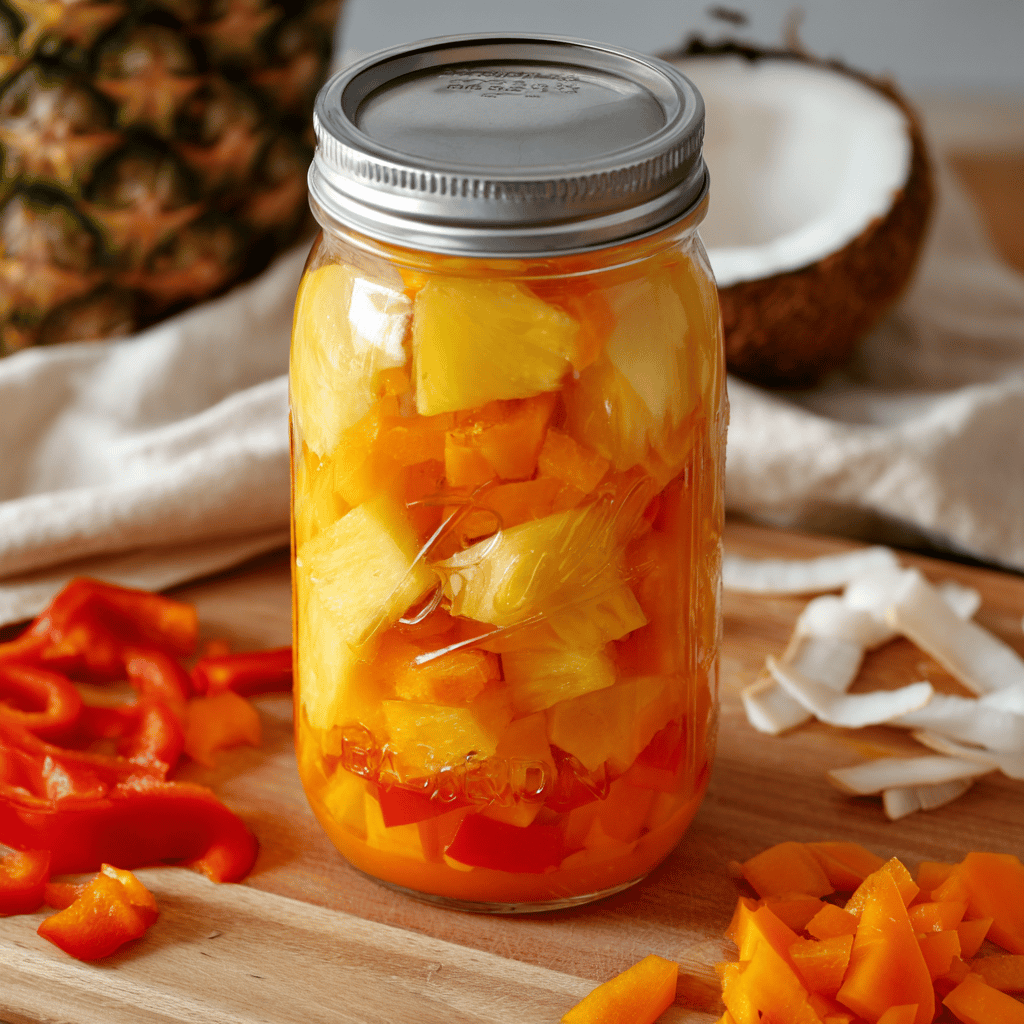
You know what? I never expected to fall head over heels for hot sauce. But here I am, about to share a recipe that’s close to my heart: Fermented Pineapple Habanero Hot Sauce. The first time I attempted it, let’s just say it was a hot mess—literally. I mean, I barely knew what fermentation was, and my sauce ended up more like a bizarre pineapple salsa that had a midlife crisis. But, oh, how times have changed!
Now, this sauce is a staple in my kitchen. My family jokes that I’ve got hot sauce running through my veins, and honestly, they’re not too far off. Each batch is a little adventure, and that slow burn paired with the sweet tang of pineapple? It’s a game changer! So, let’s dive into this tropical firestorm of flavor together, shall we?
Table of Contents
Ingredients
Oh, the ingredients! Back when I started, I’d substitute left and right because, honestly, who has everything all the time? But for the best results, try to stick to this list, learned this the hard way:
- 1 ripe pineapple, peeled and chopped
- 10 habanero peppers, stems removed (wear gloves!)
- 1 small white onion, diced
- 4 cloves of garlic, smashed
- 1 tablespoon sea salt (not the iodized stuff, trust me on this)
- 2 cups filtered water (chlorine can mess with fermentation)
- 1/2 cup white vinegar (or apple cider vinegar for a twist)
- 1 tablespoon raw sugar (optional, but it helps with fermentation)
Instructions
Alright, here we go. And remember – if I can do this after my epic failures, so can you.
- Combine the sea salt and filtered water in a jar to create a brine, stirring until the salt is fully dissolved.
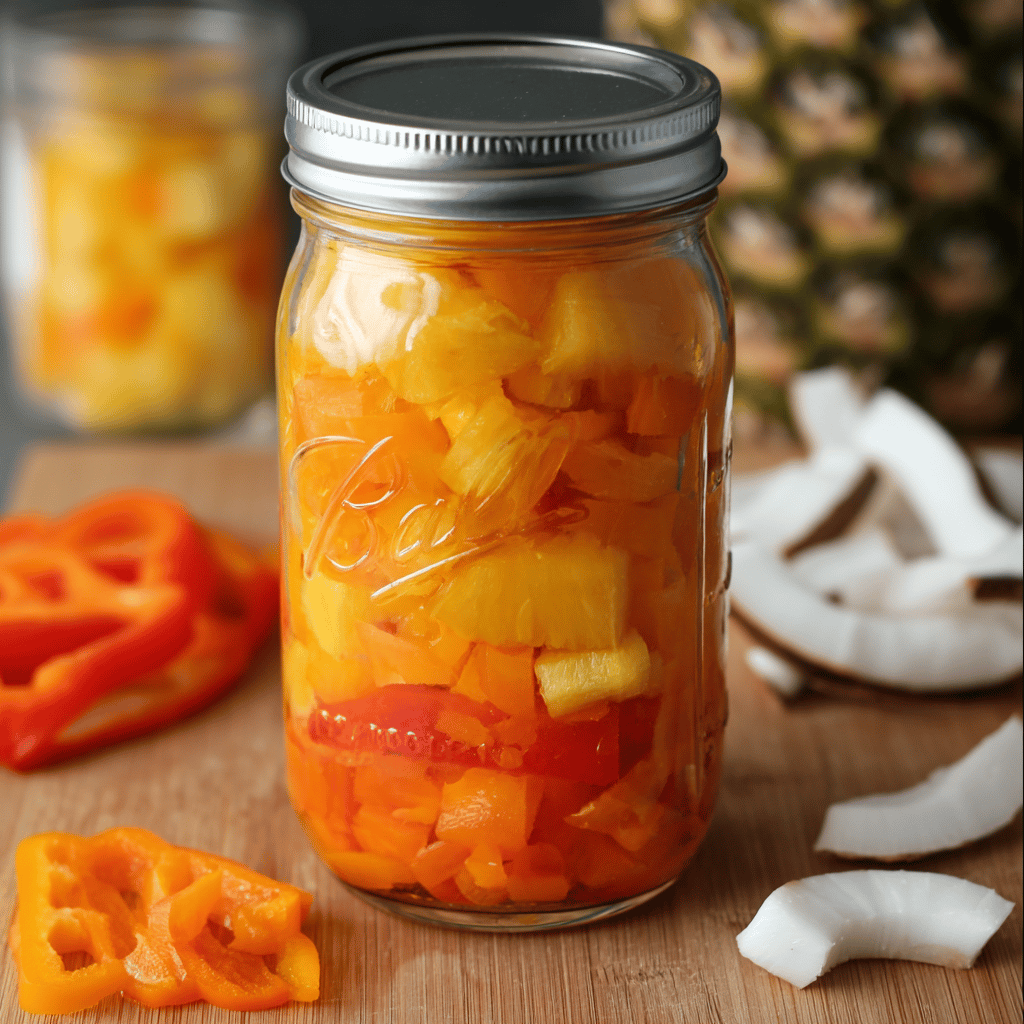
- In a large, clean jar, layer your pineapple, habaneros, onion, and garlic. Pour the brine over the top, ensuring everything is submerged. (I once didn’t submerge them fully, and let’s just say things got a little funky.)
- Place a fermentation weight or clean small jar over the mixture to keep everything below the brine. Cover with a cloth and secure it with a rubber band.
- Let your concoction sit at room temperature, away from direct sunlight, for 5 to 7 days. You’ll start to see bubbles forming—that’s the good stuff happening!
- After fermenting, transfer the mixture to a blender, add the vinegar (and sugar if you’re using it), and blend until smooth. This is where it transforms from a chunky mess to liquid gold.
- Sieve the blended mixture for a smoother sauce, or leave as is for a more rustic texture. (I’ve done both, and honestly, it’s great either way.)
- Pour your hot sauce into sterilized bottles and refrigerate. Give it a few days to mellow, and then it’s ready to enjoy!
Tips & Tricks
Let’s talk tips because, honestly, they can make or break your sauce. Here’s the lowdown from my kitchen to yours:
- Patience is Key: Fermentation isn’t instant. Give it time, and you’ll be rewarded with deep, complex flavors.
- Keep it Clean: Sterilize everything! Any unwanted bacteria can turn your hot sauce dreams into a nightmare.
- Heat Level: Love the flavor but scared of the heat? Remove the seeds from the habaneros to tone it down (but seriously, where’s the fun in that?).
FAQ
Got questions? I’ve probably asked them at some point too. Here are a few answers that might help:
Q: Can I use canned pineapple?
A: You can, but fresh pineapple gives a brighter flavor and has the natural yeasts needed for fermentation.
Q: How long does homemade hot sauce last?
A: If stored properly in the fridge, it can last several months. That is, if you don’t devour it sooner.
Q: Can I make this sauce without fermenting?
A: Sure, but you’ll miss out on the probiotics and unique tang that only fermentation brings to the table.
Troubleshooting
Run into trouble? Here’s the scoop on common issues from my own mishaps:
- Mold: If you see mold, something’s exposed to air. Always ensure everything is submerged.
- Too Much Fizz: Overactive fermentation can cause overflow. Open jars slowly and over a sink just in case.
- Not Fermenting: If you don’t see any bubbles after a few days, check your room temperature and make sure your water is dechlorinated.
And there you have it—my labor of love, this Fermented Pineapple Habanero Hot Sauce. It’s more than a condiment; it’s a story in a bottle, a testament to trial, error, and eventual triumph. It’s a fiery companion to your meals, one that’s sure to spark conversation and maybe a few tears (of joy, of course).
Remember, cooking is an adventure. Embrace the quirks and surprises along the way. Whether you’re drizzling this sauce over tacos, adding a kick to your morning eggs, or daring your friends to try a spoonful, enjoy each fiery, fermented drop. Happy cooking, and may your kitchen always be filled with the scents of creativity and the warmth of home.
Storage Tips
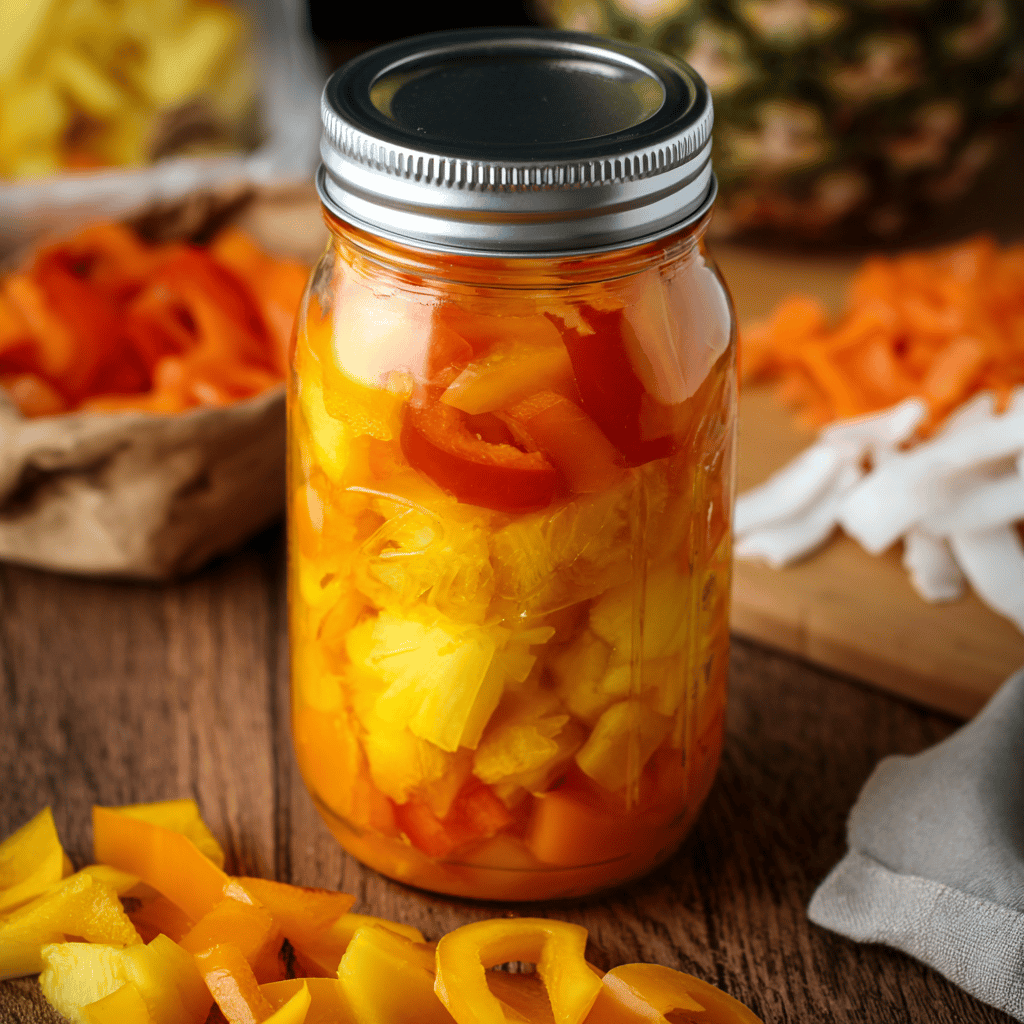
Alright, let’s chat about keeping this liquid treasure safe and sound. The last thing you want is to pour your heart into a sauce and then watch it go bad because of a silly storage mistake (yep, been there, done that).
- Keep it Cool: Your fermented hot sauce is a living thing, so treat it right! Store it in the fridge to slow down the fermentation process and preserve its flavors.
- Use Sterile Bottles: I can’t stress this enough. Sterilize your bottles before filling them up to keep the bad bugs out and the good times rolling.
- Check the Seal: Make sure your bottles seal tightly. Oxygen is the enemy here, so a good seal is like a trusty shield for your sauce.
Cooking Tips
Now for the fun part—using your hot sauce! Here’s some sage advice from my own kitchen escapades:
- Start Small: I love heat, but I don’t want to blow anyone’s head off. Start with a few drops and adjust to your (and your guests’) taste.
- Marinades: Use your hot sauce as a marinade base. It’s a fantastic way to infuse some zesty, fruity kick into meats and veggies.
- Dressings and Dips: Mix it into dressings or dips for an unexpected flavor twist. Your salads and chips will never be the same!
Cultural Story
I remember watching my grandma canning fruits and making jams when I was a kid. She’d tell stories of her youth in the Caribbean, the fresh produce, and the vibrant food culture. Those stories stuck with me, and I think that’s why I’ve always been drawn to those tropical flavors in my cooking, especially this hot sauce.
This sauce isn’t just about heat; it’s a blend of cultures, a bridge between my grandma’s past and my culinary experiments. It’s a nod to the tradition of preserving and fermenting foods, a practice that spans many cultures and generations.
Substitutions
Let’s face it, sometimes you’ve got to improvise. Here are some substitution tips, just in case:
- No Habaneros? Try Scotch bonnets for a similar heat and sweetness or jalapeños for a milder kick.
- Out of Pineapple? Mango can be a fun tropical alternative, though it’ll give you a different flavor profile.
- Vinegar Varieties: If you’re out of white vinegar, apple cider or even red wine vinegar can add an interesting twist.
Calories
Okay, for the health-conscious folks out there—yes, this hot sauce has calories, but not a lot. We’re talking roughly 20 calories per tablespoon (depending on how much sugar you add). So go ahead, add a splash of fiery joy to your dishes without the calorie guilt.
Conclusion
There you have it, my fellow spice seekers—everything you need to know to make and enjoy Fermented Pineapple Habanero Hot Sauce. It’s been a journey filled with fiery pits and sweet victories. From my first failed batch to the bottles I proudly stock my fridge with, each one holds a special place in my heart (and my stomach).
Embrace the fermentation process, experiment with flavors, and don’t be afraid to make it your own. I hope this sauce brings as much joy to your table as it has to mine. Keep cooking with love and a dash of adventure. Until the next kitchen escapade—stay spicy, my friends!