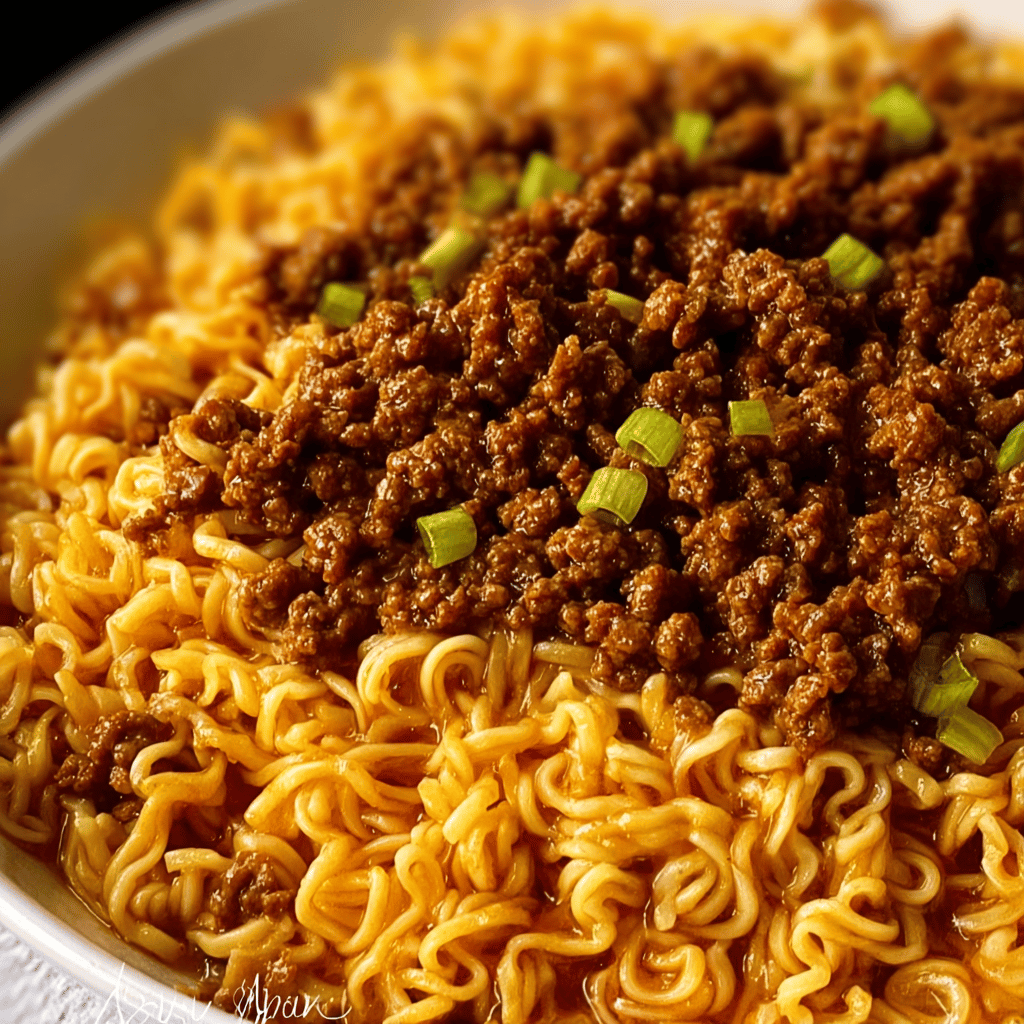
The first time I set out to make Korean-Style Ground Beef Ramen, let’s just say it wouldn’t have won any awards. I mean, the beef was overcooked, the noodles were mushy, and I actually forgot to add the gochujang. Total disaster. But, you know what? It was a learning curve. And now, after several attempts and a little help from my friend Min, who hails from Seoul, I’ve got this recipe down to a delightful, soul-warming science. It’s the perfect blend of savory, spicy, and umami – a true comfort dish that brings me back to those nights spent at Min’s family table, enveloped in the aromas and laughter that come with good food and great company.
Now, whenever I crave something hearty and full of flavor, this is my go-to dish. The kids can’t get enough of it, and honestly, it’s become a staple for those lazy Sunday dinners. So grab your apron, and let’s get cooking!
Table of Contents
Ingredients
My mom always said the best dishes start with the freshest ingredients, and she was right (as usual). Here’s what you’ll need for this dish:
- 1 lb ground beef
- 2 packs of ramen noodles (discard the flavor packets or save for another use)
- 1 tablespoon olive oil
- 3 cloves of garlic, minced
- 1 tablespoon ginger, finely grated
- 3 tablespoons soy sauce
- 2 tablespoons brown sugar
- 1 tablespoon sesame oil
- 2 tablespoons gochujang (Korean red pepper paste)
- 4 cups beef or vegetable broth
- 1 cup of green onions, chopped
- 1 tablespoon toasted sesame seeds (for garnish)
- Optional: Sliced mushrooms, baby spinach, or other vegetables of your choice
Instructions
Now, about those instructions… Don’t worry, I’ve burnt my fair share of garlic to learn the right sequence. Follow these steps for the perfect Korean-Style Ground Beef Ramen:
- Heat the olive oil in a large skillet over medium heat. Add the ground beef and cook until browned, breaking it apart with a spatula as it cooks.
- Add the minced garlic and grated ginger to the beef and sauté until fragrant, about 1 minute (don’t let the garlic burn, learned this the hard way).
- In a small bowl, whisk together soy sauce, brown sugar, sesame oil, and gochujang until well combined. Pour this mixture over the cooked beef, stirring to coat the beef evenly, and cook for another 2 minutes.
- In a separate pot, bring the beef or vegetable broth to a boil. Add the ramen noodles and cook per package instructions (usually 3-4 minutes) until al dente. If you’re adding vegetables, toss them in during the last 2 minutes of cooking.
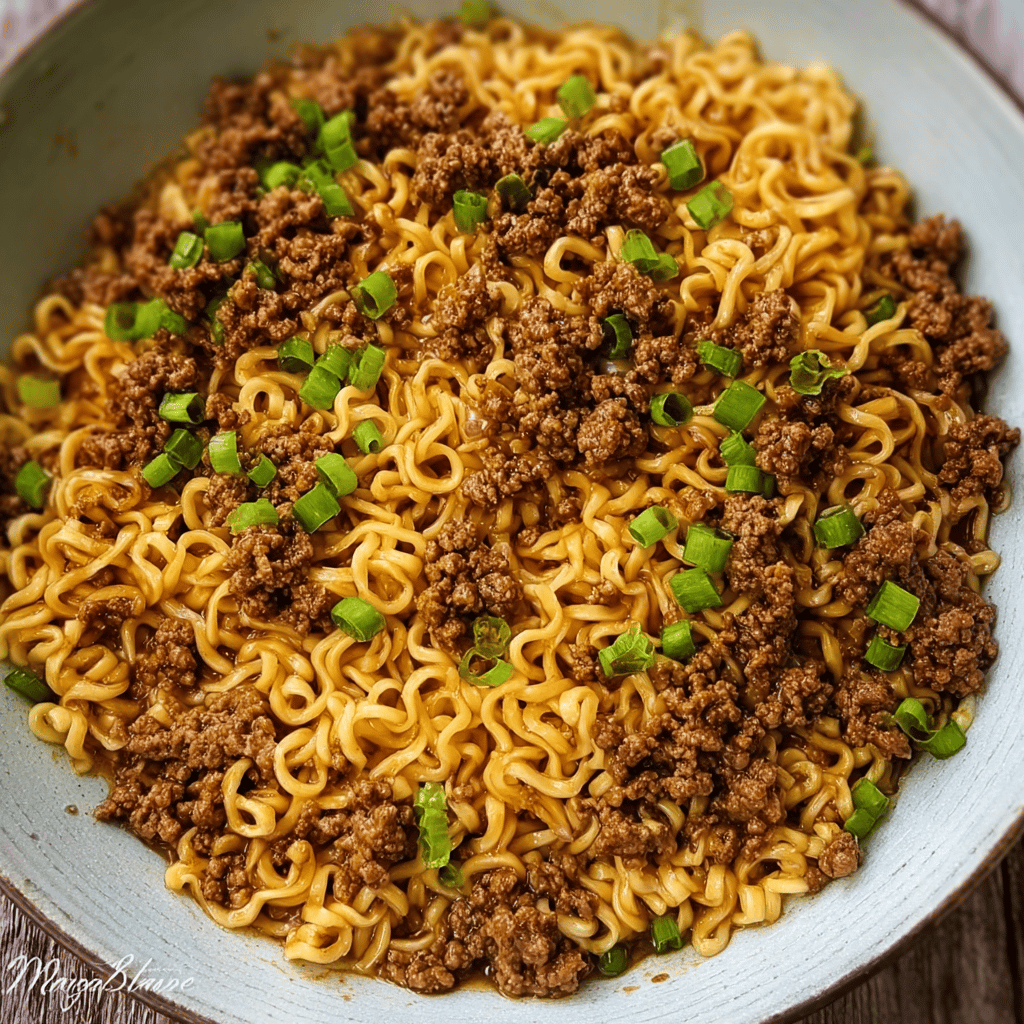
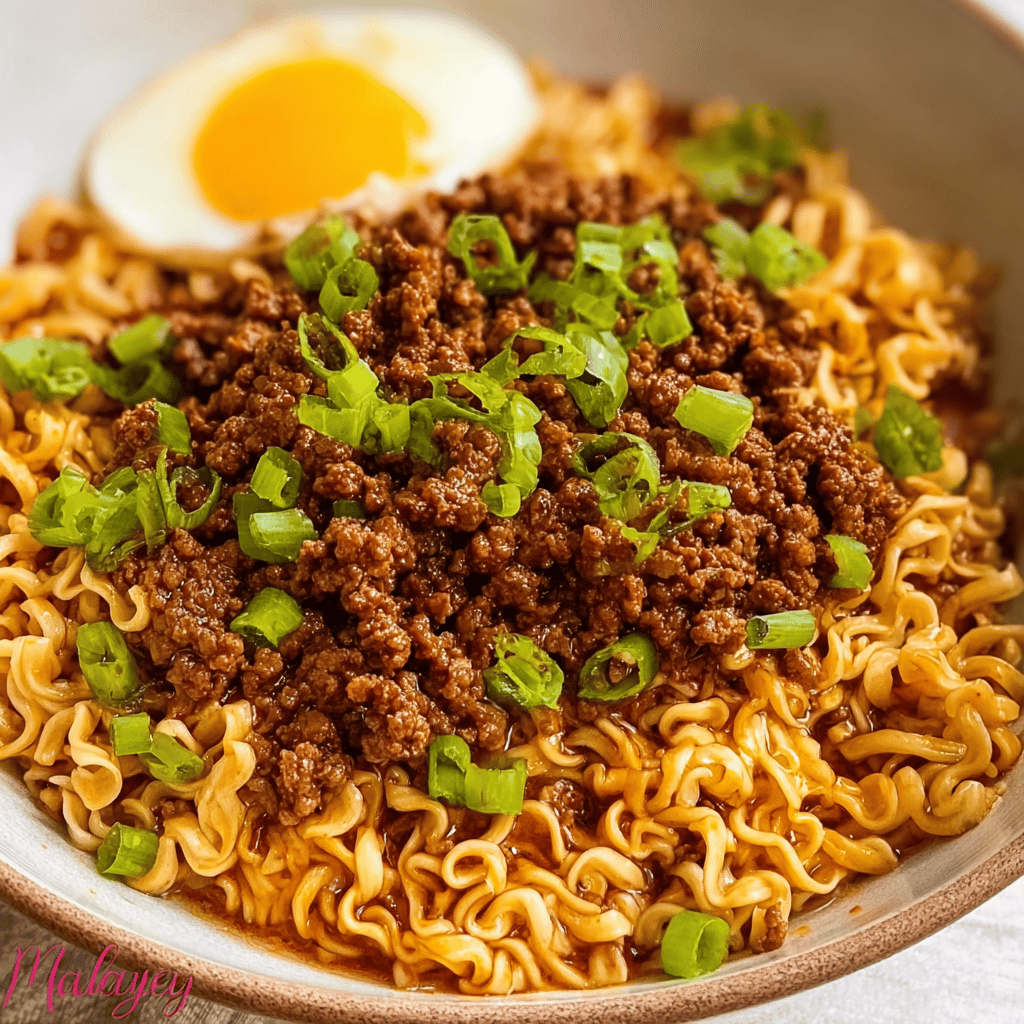
- Once the noodles are cooked, divide them into bowls. Top with the Korean-style ground beef and pour the hot broth over the top.
- Garnish with chopped green onions and sesame seeds. Serve immediately and enjoy the harmony of flavors!
Tips & Tricks
Oh, and another tip… (game changer!)
- Experiment with the level of heat by adjusting the amount of gochujang to suit your preference. This stuff is spicy, so start with less if you’re unsure.
- For a richer broth, feel free to stir in a spoonful of miso paste – it adds a lovely depth of flavor.
- If you can’t find gochujang, sriracha mixed with a little sugar can be a decent substitute. It’s not the same, but it’ll do in a pinch.
- Want to make it a complete meal? Throw in some veggies for added nutrition. Just remember to add them towards the end, so they retain their crunch.
FAQ
Got questions? I’ve got answers (and a couple of stories)!
Q: Can I use ground turkey instead of beef?
A: Absolutely! I’ve done it before when I realized mid-recipe that my beef was still in the freezer. The taste is slightly different, but it’s just as delicious.
Q: How many calories are in Korean-Style Ground Beef Ramen?
A: It varies based on the ingredients you use, but it’s roughly around 500-600 calories per serving. Not bad for such a filling meal, right?
Q: Do you have any storage tips for leftovers?
A: Definitely! Store the broth, beef, and noodles separately if you can (trust me, soggy noodles are no fun). It’ll last in the fridge for up to 3 days.
So there you have it, my take on Korean-Style Ground Beef Ramen. Each slurp is a reminder of the journey I took to perfect this recipe, from the slightly charred garlic mishap to finally nailing the balance of flavors. It’s a testament to the fact that sometimes, the best dishes come from a few mistakes and a lot of love. And honestly, nothing beats seeing the satisfied faces around the dinner table after serving this dish.
As the seasons change and the chill in the air invites the warmth of comforting meals, I hope you’ll find as much joy in making and sharing this dish as I have. It’s more than just food; it’s a story in every bite, a cultural tapestry that weaves together the best of what cooking is all about: bringing people together.
Troubleshooting
Let’s be real, sometimes things don’t go as planned in the kitchen. Here are a few hiccups you might encounter and how to fix them:
- If your broth tastes too salty, add a bit of water to dilute it. And remember, you can always add salt, but you can’t take it away – so taste as you go!
- Is your gochujang overpowering? Balance it out with a touch more brown sugar or a splash of rice vinegar for complexity.
- Got mushy noodles? Next time, cook them less than the package recommends – they’ll continue to soften once in the hot broth.
- If your ground beef is dry or tough, it could be overcooked. Ground beef cooks quickly, so once it’s browned, proceed with the next steps promptly.
Remember, cooking is all about adapting. I’ve made these mistakes, and they’ve only made me a better cook. So don’t be discouraged if things go awry – it’s all part of the delicious journey.
Cooking Tips
Here’s the scoop – a few more tips that’ll make your Korean-Style Ground Beef Ramen simply unbeatable:
- For an authentic touch, top your ramen with a soft-boiled egg. Just boil for 6 minutes, then plunge into ice water before peeling.
- Add a drizzle of chili oil for an extra kick and a shiny finish that’ll make your Instagram photos pop.
- Don’t have ramen noodles? Udon or soba can be great substitutes and bring a new twist to the dish.
- Always taste your broth before serving. It’s the soul of the dish, and the right balance of flavors is critical.
- Play some K-pop in the background while cooking – it sets the mood and somehow, I swear, makes the food taste better (trust me on this).
These tips have saved my dinner more times than I can count (learned this the hard way), and they’re bound to help you too.
Storage Tips
I’ve learned that good storage is almost as important as good cooking. Here’s how to keep your leftovers tasting fresh:
- Let the components cool before storing (to avoid condensation which can make things soggy).
- Use airtight containers to maintain freshness and prevent any fridge odors from seeping in.
- Freeze the cooked ground beef mixture if you want to keep it longer than a few days. It should be good for up to a month.
- If you’re meal prepping, assemble the components in separate containers so you can reheat and combine them just before eating.
Trust me, nobody likes a limp noodle or a flavorless broth, so these storage tips are clutch.
The Heart Behind the Bowl
As I ladle out the steaming broth and watch the steam rise, I’m transported back to those evenings in Seoul. I remember the way Min’s grandmother would patiently show me the art of Korean cooking, her hands deftly mixing, tasting, and adjusting as she went. It’s moments like those that infuse this dish with so much more than calories – it’s loaded with memories and tradition.
Every time I make this ramen, it’s a nod to the culture that so graciously opened its arms to me, teaching me that food is more than sustenance; it’s a language of love. So when you gather the ingredients, and as you stir the pot, remember that you’re not just making a meal – you’re crafting an experience that transcends borders and kitchens. That’s the true beauty of cooking.
Substitutions
Not everyone has a pantry full of Korean ingredients, and that’s okay! Here are some quick swaps that can save your dish:
- No gochujang? Mix some red chili flakes with a little soy sauce and sugar for a makeshift version.
- Out of sesame oil? Use a neutral oil and add a sprinkle of toasted sesame seeds for some of that nutty flavor.
- Vegetarian or vegan? Omit the beef and use tofu or mushrooms instead. Use vegetable broth and check the ramen noodles are egg-free.
- Lactose intolerant? Good news – this recipe is naturally dairy-free!
These substitutions have come to my rescue on more than one occasion, and I’ve discovered some delightful variations along the way.
Conclusion
There you go, folks – my labor of love, the Korean-Style Ground Beef Ramen. It’s a dish that tells a story, one of friendship, cultural exchange, and the relentless pursuit of deliciousness. Each spoonful is a testament to the adventures and misadventures that take place in the heart of the home: the kitchen.
Whether it’s your first time trying Korean flavors or you’re a seasoned fan, this recipe is forgiving, versatile, and, above all, comforting. So the next time you’re in the mood for something that warms you from the inside out, give this ramen a whirl. Who knows? It might just become a new favorite in your culinary repertoire.
And remember, the journey is as important as the destination. Embrace the spills, the overcooked noodles, the too-spicy broth – they’re all chapters in your own cooking story. So take a deep breath, enjoy the process, and above all, cook with love. That’s the real secret ingredient.